

Inside Centre Pompidou Hanwha Seoul: Tickets, Tips, and the Cubists Exhibition
Updated: July 3, 2026
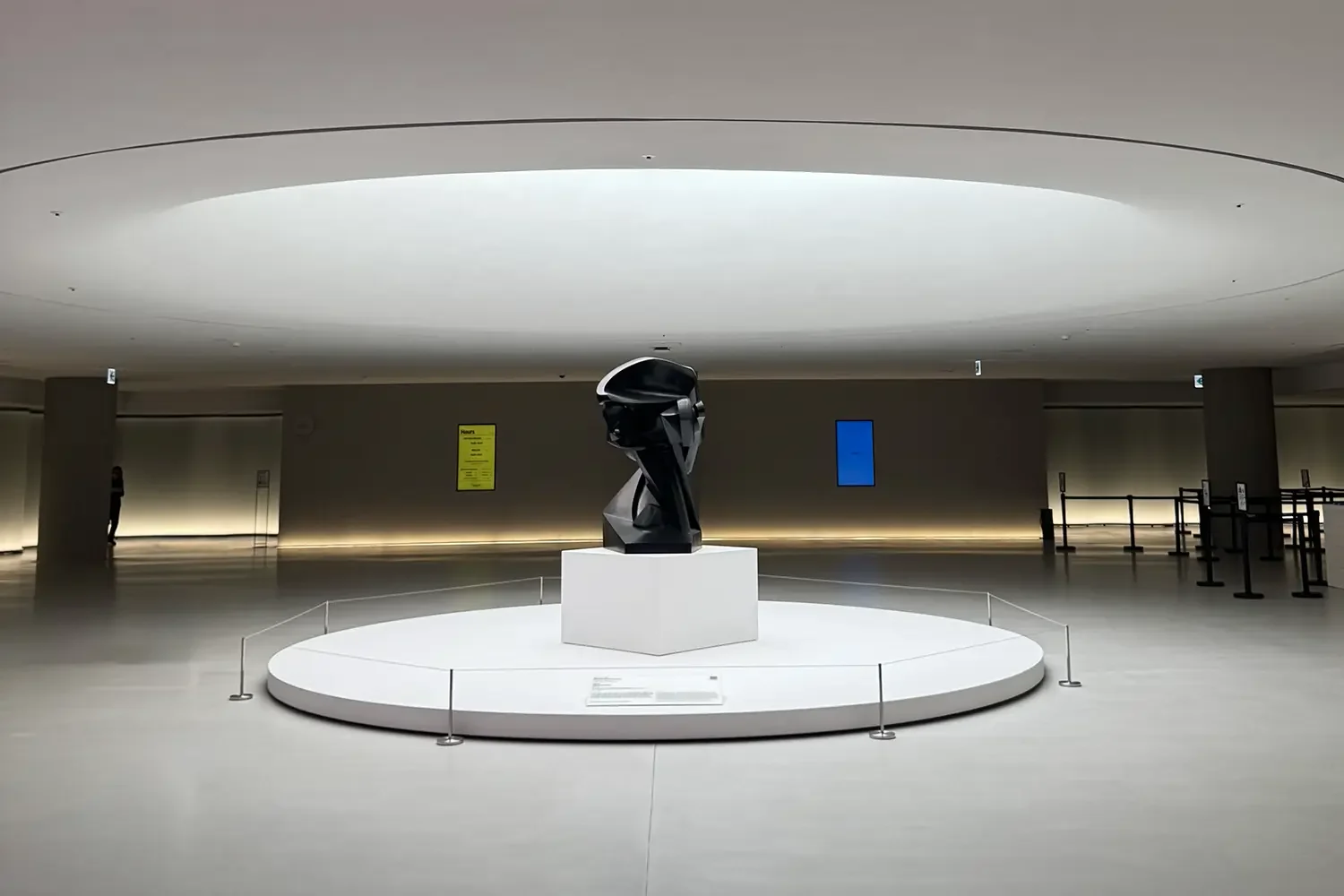
View of the main lobby with a Cubist sculpture
Quick info:
Address: 63 Building, 50 63-ro, Yeongdeungpo-gu, Seoul (the museum has its own street-level entrance, separate from the main 63 Building lobby)
Hours: Tue, Thu, Fri, Sun 10:00-18:00 (Last entry: 17:30), Wed, Sat 10:00-21:00 (Last entry: 20:30), Closed on Mondays. Always check the official website for the latest hours.
Website:centrepompidou-hanwha.kr
Admission: 28,000 KRW (about $18 USD), timed entry
Current exhibition: The Cubists: Inventing Modern Vision, running through October 4, 2026
Nearest subway: Yeouinaru Station (Line 5), about a 10 minute walk toward the 63 Building.
Getting There and Finding the Entrance
By taxi or Uber taxi:
The museum has its own dedicated entrance/drop off point, so if you're taking a taxi, input the museum's address directly rather than "63 Building" to avoid confusion.
Drop off at 63 Building. Most taxi drivers will be more familiar with this drop-off point, so you can use this as a backup drop-off point.
It's just as easy to reach the museum through the 63 Building's office lobby. If your taxi drops you at the main 63 Building entrance, simply take the escalator down to Level 1 from the office lobby, then walk past the restaurants and pop-up stores toward the museum. Signage throughout the building was clear and easy to follow.
By public transport:
Subway Line 1: stop at Daebang Station, via Exit 7.
Subway Line 5: stop at Yeouinaru Station, via Exit 3.
Subway Line 9: Stop at Saetgang Station, via Exit 3.
By Free Shuttle Bus: A free shuttle bus connects the 63 Building to 3 nearby subway stations: Daebang Station (Line 1, Exit 6), Yeouinaru Station (Line 5, Exit 4), and Yeouido Station (Line 5, Exit 5). More info here.
By bus: take numbers 5633, 5634, or 261.
Tip: The walk from the subway stations can feel long in summer, so consider taking the bus or the free shuttle bus from the stations. The public buses stop almost directly in front of the museum, a 2-3-minute walk away. In spring and autumn, the walk towards the museum is nice and quite scenic due to the nearby park.
Buying Tickets: What to Expect
General tickets for Centre Pompidou Hanwha is 28,000₩ and can be purchased either on site or online, and they are timed. The good news is that once you're inside, you can stay as long as you like. The catch is that if you miss your entry window, the ticket may be voided with no refund, at least according to the notice posted on the official ticketing site.
I'll be honest: the online booking process is not the most intuitive, especially for foreign visitors. I checked out as a guest despite providing my email, and here's roughly how the process unfolded:
After purchase, I received a confirmation email noting that the QR code would only be released on the day of my visit.
One day before, a reminder email arrived.
On the day itself, another reminder came through with a link to view my ticket's QR code.
The link required logging in, and the page was entirely in Korean with no English toggle (a quick Google auto-translate handled it well enough).
To log in, I entered my email and a random password, which triggered a follow up email with a one-time password.
Using that one-time password and my email, I could finally access the QR code.
My tip: screenshot the QR code as soon as you see it. The login process repeats every time the browser refreshes, and if you've bought a group ticket, each person needs their own screenshot, since it's one QR code per ticket. You'll need to scan it both to enter the main galleries and to access the museum cafe.
Lockers: Plan for a potential queue
Using a locker is worth it once the galleries start filling up, but there are a few quirks. The system is cashless, and storage is only free for the first hour. There's also just one machine to pay for and release lockers, so expect a possible line.
During my visit, the wait was mostly at retrieval time, partly because the Japanese translations on the machine weren't very clear, and partly because some older local visitors weren't set up to pay by mobile device. Budget a few extra minutes for this if you're on a schedule.
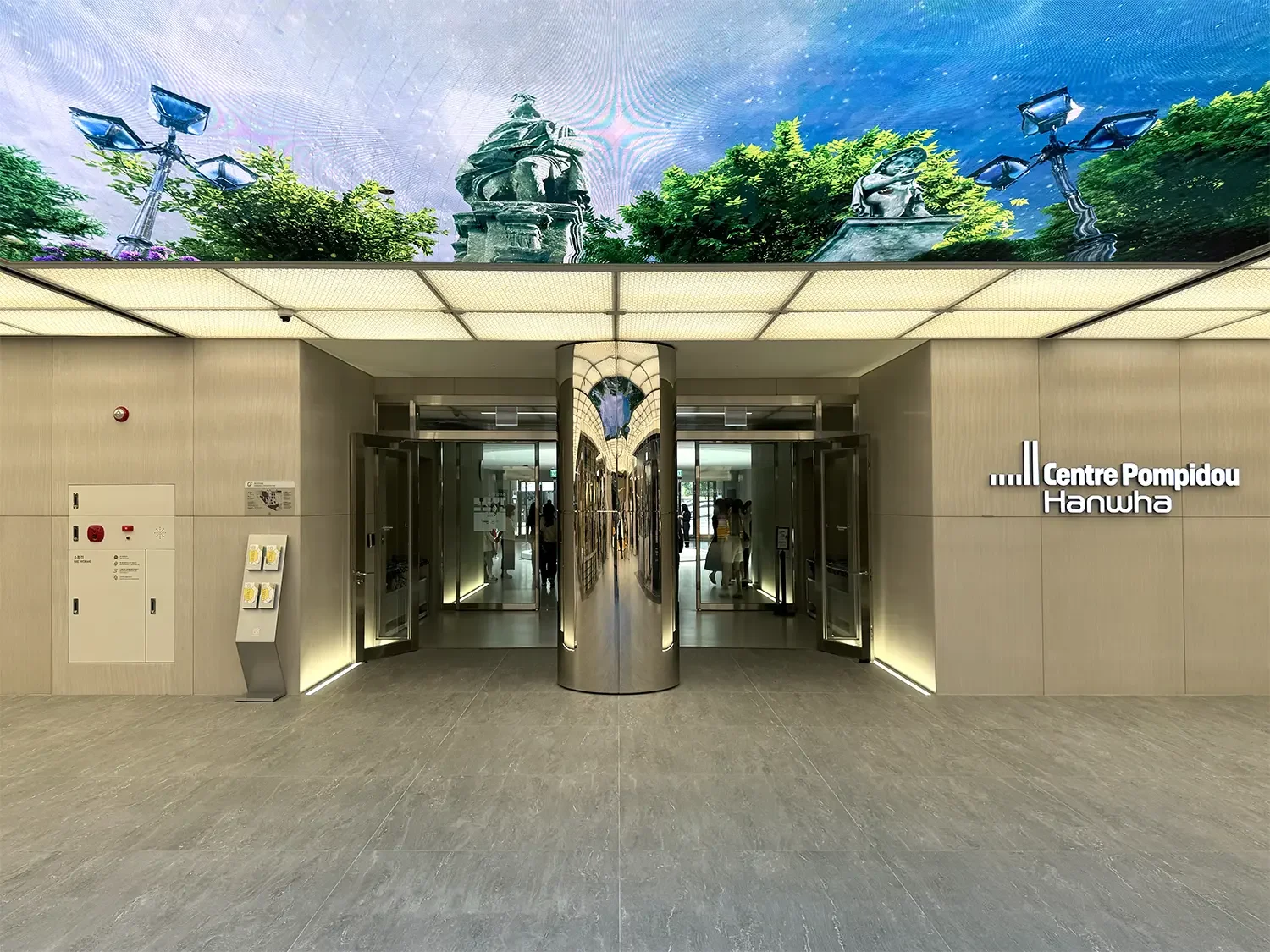
View of the entrance from within the 63 Building.
First Impressions
Tucked inside the newly renovated 63 Building in Yeouido, Centre Pompidou Hanwha is Seoul's newest art museum, showcasing works on loan from the Centre Pompidou collection in Paris. Designed by architect Jean-Michel Wilmotte, the space was once an aquarium, now transformed into something almost futuristic. Curved, semi-translucent panels wrap the facade, giving pedestrians a glimpse of the digital displays inside. At night, the building glows like a light box, exactly as the architect intended.
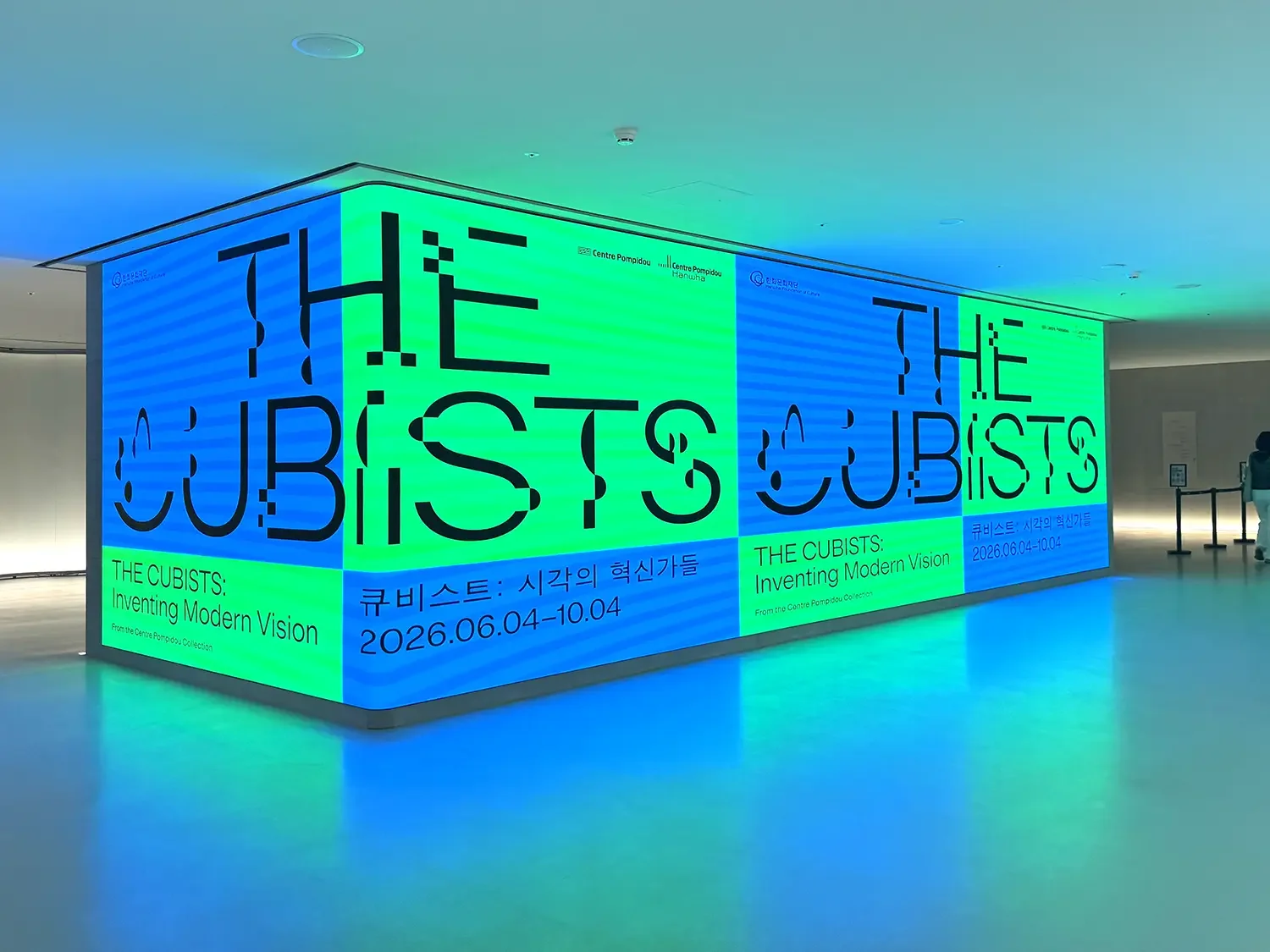
The lobby alone is worth pausing for. Visitors are greeted by a large Cubist sculpture by Raymond Duchamp-Villon, centred beneath a soft, oversized light fixture, a display dramatic enough to double as an artwork in its own right. The ticketing and info desk sits tucked into one corner, while a large digital screen on the opposite side loops key visuals from the current exhibition.
If you're planning a slow, unhurried day in Seoul and want to add a fresh art stop to your itinerary, here's everything I learned during my visit, from buying tickets to finding the best coffee afterward.
Making Your Way Through the Building
To enter the galleries, visitors pass through a gantry by scanning the QR code from their ticket (see the ticketing section above for how to get it onto your phone).
Beyond the gantry is a cold, metallic, almost sterile space with only elevators and escalators, very much in keeping with the museum's futuristic aesthetic. Ride the escalator up, though, and you're met with a sudden burst of natural light. This next level feels like a second lobby, home to the cafe "the coffee," which faces full height windows overlooking an outdoor garden. The contrast after the gantry is striking.
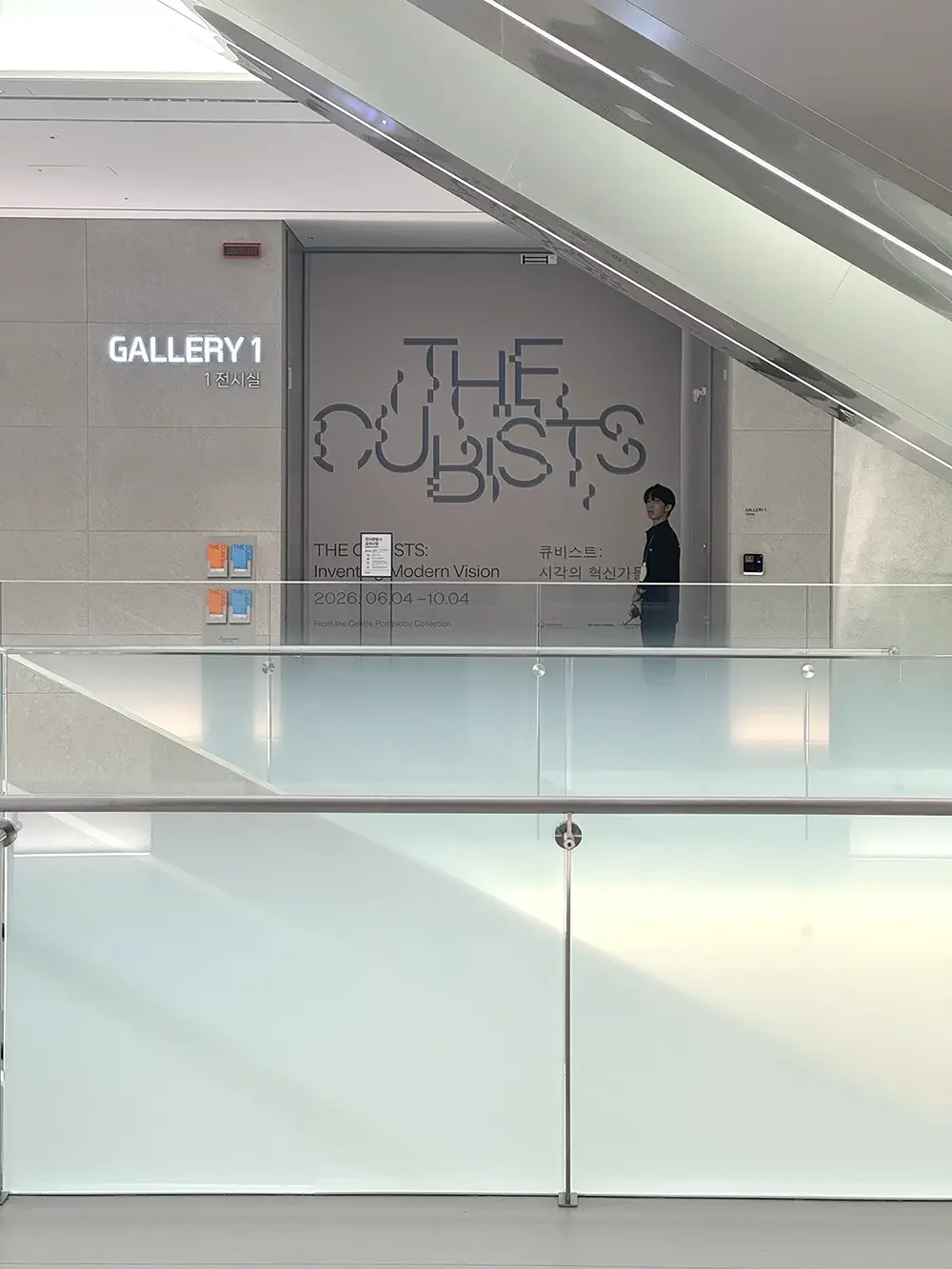
The galleries themselves sit one more level up, reached via another escalator past the cafe. This layered journey through multiple escalators builds a bit of anticipation, though it can also feel slightly tedious if you're eager to get straight to the art. There isn't much in the way of visual storytelling or wayfinding between the gantry and the galleries beyond minimal signage, which may well be an intentional part of the concept.
For quick reference, here's how the floors break down:
Level 1: Street level entrance, lobby, ticketing, gantry, and museum shop
Level 2: The cafe "the coffee" and the auditorium
Level 3: Exhibition galleries
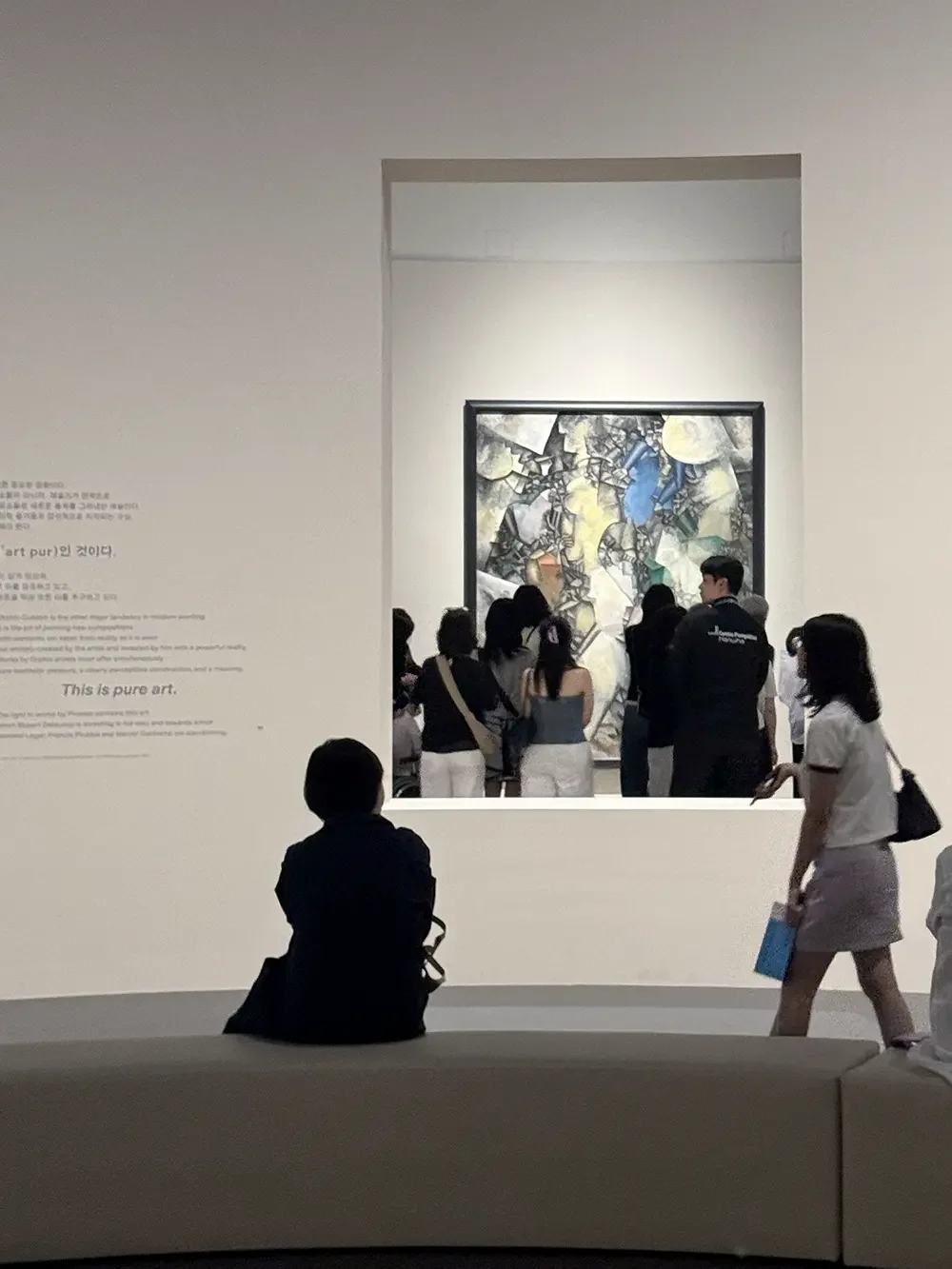
The Inaugural Exhibition: The Cubists
The museum opened in June 2026 with its first exhibition, The Cubists: Inventing Modern Vision, which runs through October 4, 2026.
As someone who studied modern art history, I found it a genuine treat. Several paintings I had only encountered in textbooks were suddenly in front of me, and a few I'd seen before on past travels, in entirely different exhibition contexts.
The show itself is not overly complex or provocative. It unfolds chronologically with an easy, natural flow, which makes it approachable even if Cubism isn't usually your thing. The exhibition design is understated but effective, and the space feels spacious despite occupying just two galleries.
One small design quirk worth mentioning: some of the exhibition walls curve slightly, which creates an odd visual effect where artworks appear not quite level. I noticed something similar with an Agnes Martin painting at the Guggenheim in New York, so this may simply be an occupational hazard of curved gallery architecture.
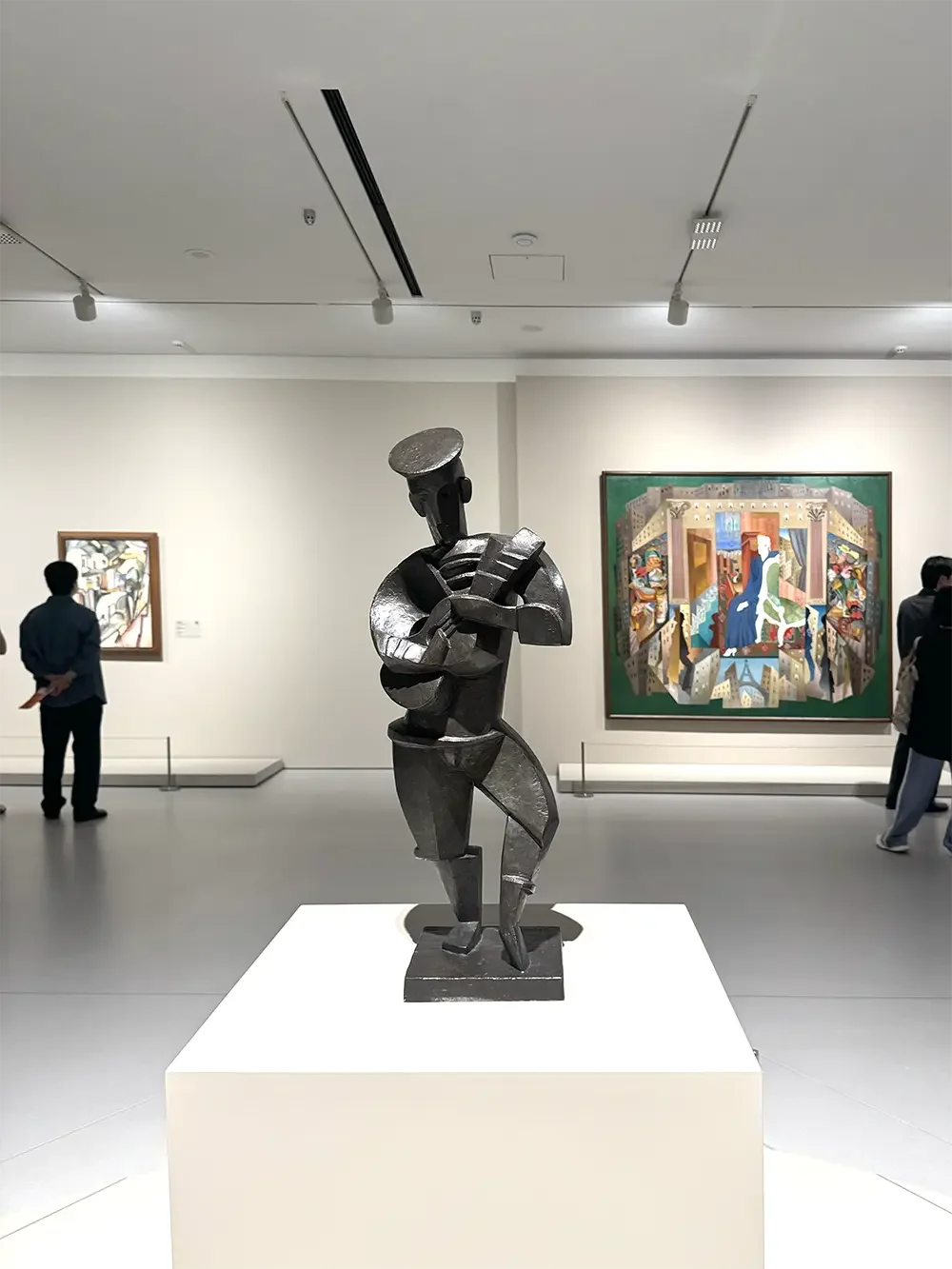
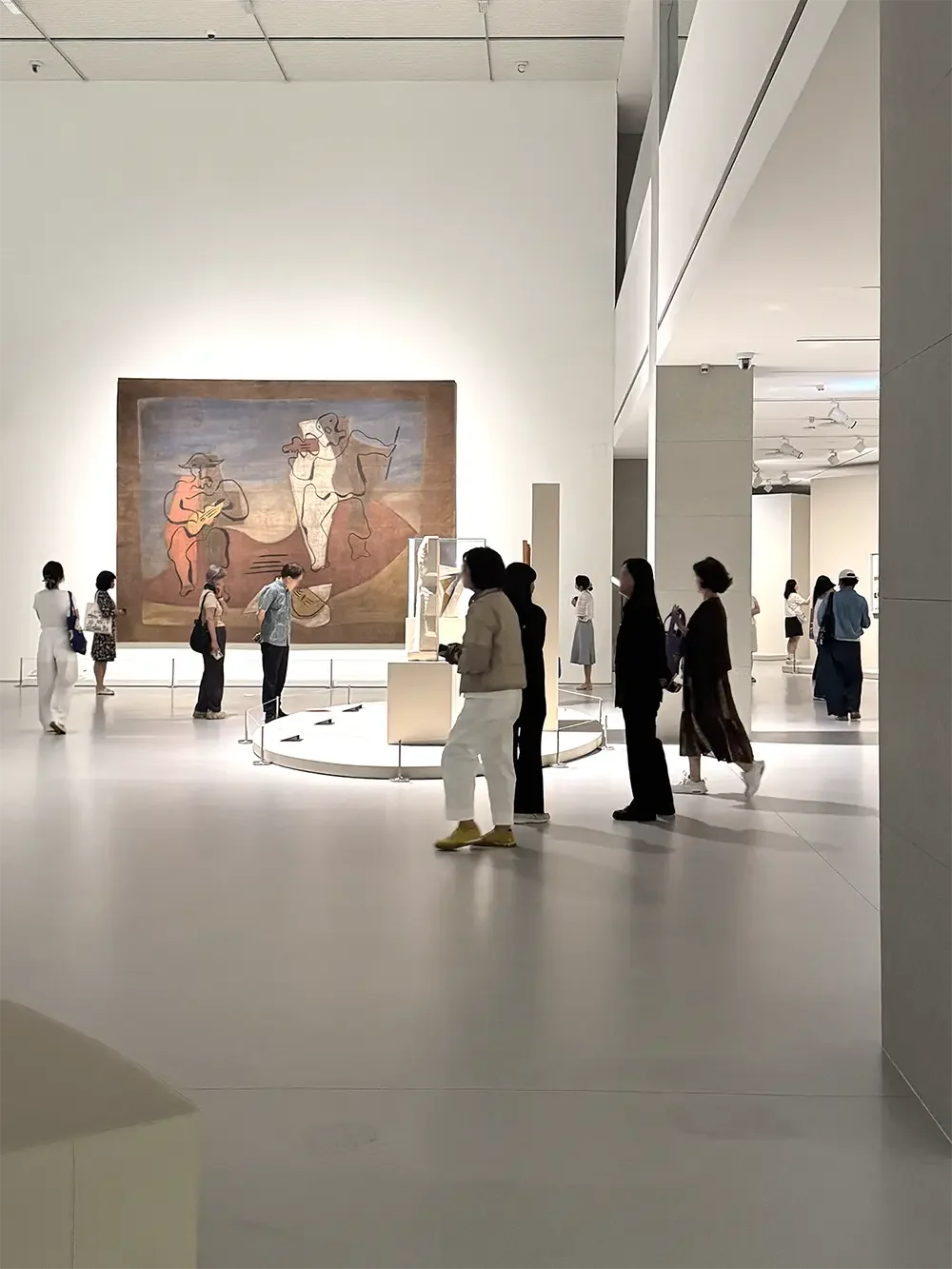
After the Galleries: Coffee, Pop-Up Shops,, and the 63 Skypicnic
Once you've finished with the exhibition, visitors can enjoy a cup of coffee at the museum’s in-house cafe. Simply called "the coffee," it is run by a Japanese coffee roastery using beans sourced and roasted from Brazil. If you have time, it's worth pausing here for a cup with a garden view. You can read more about the roastery at thecoffee.jp.
Alternatively, you'll exit back through the same escalators to Level 1 and the museum shop. From here, skip the main street exit and instead take the other exit that leads back into the 63 Building and you'll find pop-up craft and stationery shops, another coffee stop at %Arabica, and a handful of new restaurants and cafes on the same level.
One standout is a shop called Poset, which sells postcards, greeting cards, and a few journaling and ink sketching tools. It features work from a wide range of local and international illustrators, so there's a style (and an occasion) for almost anyone.
If you have more time, go up to the top of the 60th floor to experience the new 63 SkyPicnic to get a 360 degrees and panoramic view of the Han river and the Seoul skyline. The revamped observatory takes up the top 3 floors of the building and now includes interactive light and digital art installations, a cafe (Starbucks) and an outdoor rooftop space (which is where the helipad is and is open to public for the first time in a long time).
Tickets are also required to access the observatory and online booking is encouraged. If you are interested in the observatory, I suggest combining this with the Centre Pompidou Hanwha for a half day trip. My suggestion would be to do this trip later in the day. A sample itinerary:
Have lunch
Post lunch: museum exhibitions + coffee break or snacks + shop
Sunset: go to the observatory and catch the sunset view from the rooftop before dinner.
Dinner: End the night with dinner (and drinks) at one of the restaurants in the building, now called the 63 Skyline Dining experience (reservations are required for each of these).
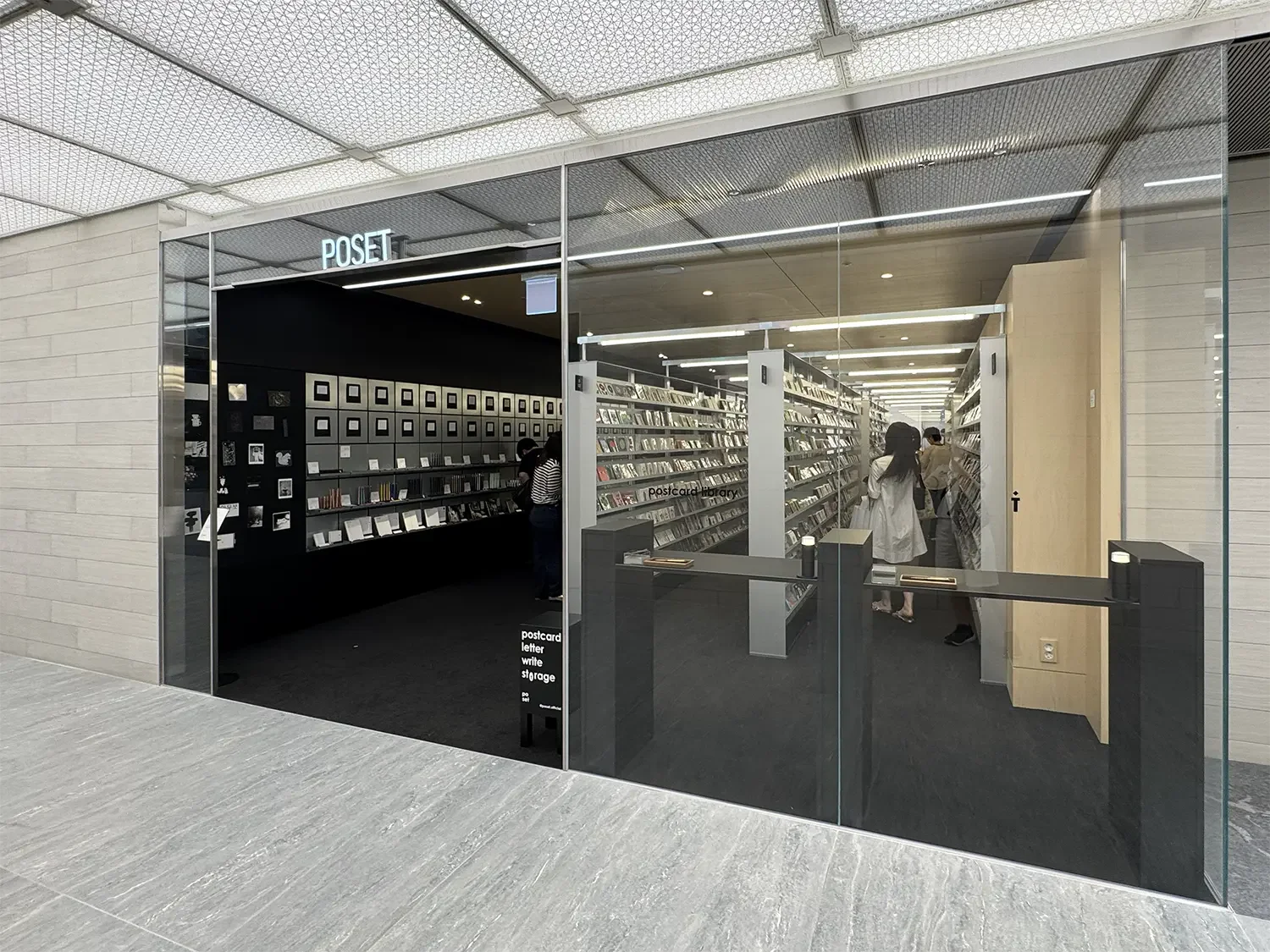
Poset is a stationary and card store at the newly renovated 63 Building.
Final Thoughts
All in, the museum experience runs about two hours, not counting time spent lingering over coffee. It's a manageable, unhurried addition to a slow travel day in Seoul. Between the Cubism exhibition, the architecture, and the pop-up shops next door, it's easy to fill an entire afternoon here without ever feeling rushed.
Found this helpful? 📌 Pin the images to save it for later and share the inspiration with others! ❤️